
TOURNAMENTS • CORPORATE EVENTS • BRANDED MERCHANDISE
Custom Golf Gloves for Tournaments and Corporate Events
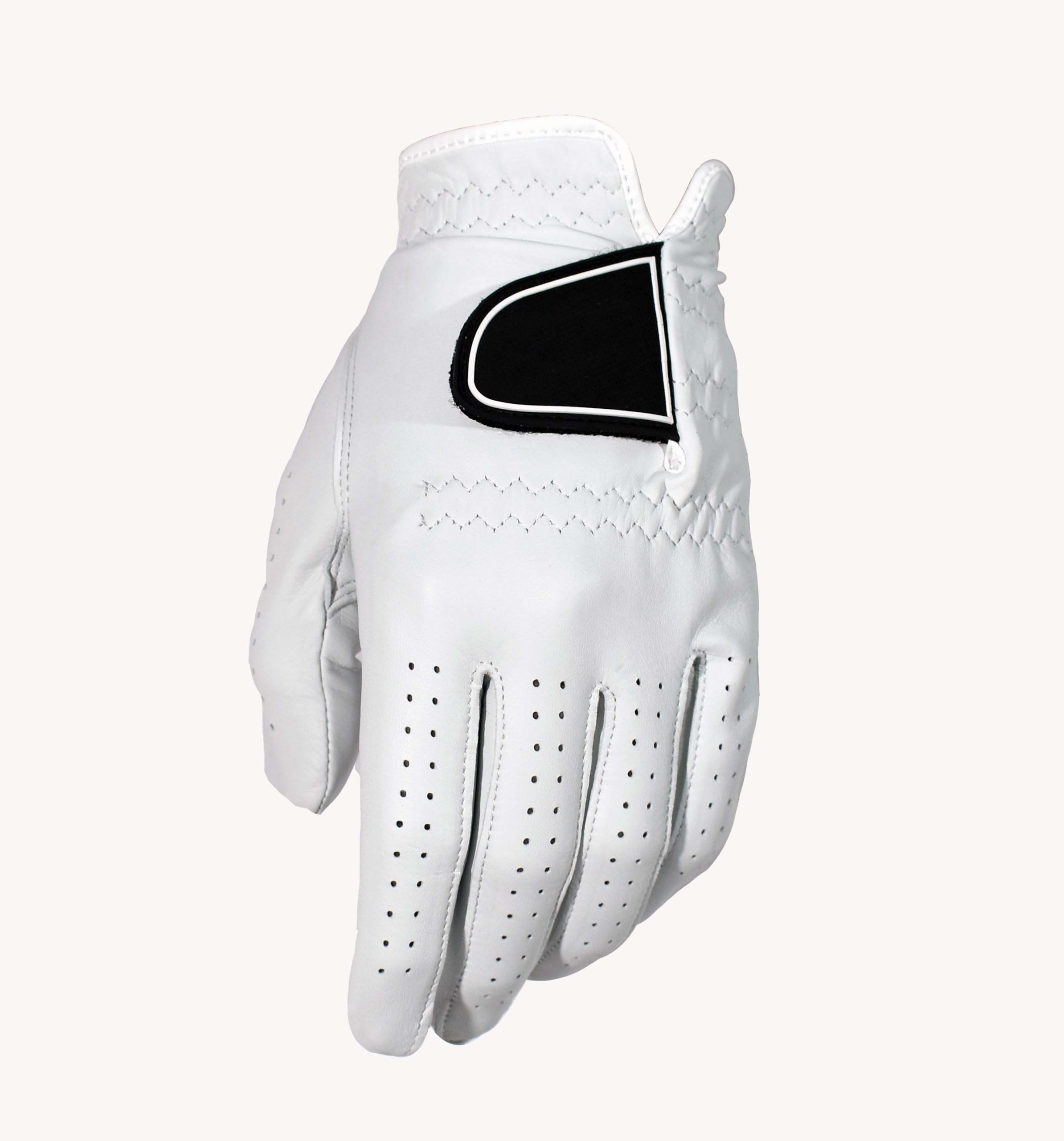
Custom tournament golf gloves turn a practical piece of golf equipment into a useful event gift, sponsor asset and lasting brand reminder. Miraj Enterprises develops branded gloves for tournament organizers, corporate event planners, golf clubs, agencies and promotional-product buyers.
Plan the material, logo placement, left- and right-hand mix, sizes, packaging and delivery date before production begins.
Quick Answers
What are custom tournament golf gloves?
Golf gloves made with an event, sponsor, club or company identity. They may include a printed or embossed logo, selected colors, size and hand variants, and branded presentation packaging.
Why are they popular?
They are useful during the event, relevant to golfers and easier to connect with the tournament than a generic giveaway. They can serve as tee gifts, VIP gifts, sponsor merchandise or player-pack items.
What is the minimum order?
A typical starting MOQ is 100 pairs. The final minimum can change with material, logo versions, colors, size and hand combinations, and packaging.
What can be customized?
Material, glove color, closure tab, logo method, size range, left- or right-hand orientation, labels, inserts, polybags, header cards and gift boxes.
How long does production take?
Samples commonly take 3–7 days. Bulk production commonly takes 15–25 days after sample approval. Artwork approval, revisions, packing and shipping add time.
What are the best use cases?
Charity tournaments, corporate golf days, member-guest events, sponsor activations, club championships, client entertainment, sales incentives and branded employee gifts.
What affects pricing?
Material, quantity, branding method, number of variations, packaging, sample development, delivery destination and deadline.
Executive Summary
Custom tournament golf gloves work best when they are planned as part of the event experience rather than treated as a last-minute promotional item. The glove must fit the intended golfer, carry the brand clearly, feel appropriate for the event level and arrive before player packs are assembled. A successful order starts with the participant count, hand and size strategy, material tier, artwork, packaging and delivery deadline. Cabretta leather supports premium gifting, microfiber supports durable value programs, and hybrid construction can balance feel and cost. Keep the glove design simple, move complex sponsor lists to the packaging, approve a physical sample, and leave enough time for revisions, production, quality checks and shipping.
Introduction
Golf events combine sport, networking, hospitality and brand exposure. The merchandise chosen for the event should support all four. A branded glove is different from a novelty giveaway because participants can use it on the course and keep it for later rounds.
The buying challenge is not simply choosing a logo. Organizers must decide who receives the glove, which hand they play with, what sizes are needed, how premium the gift should feel, how sponsors are represented and when the shipment must arrive.
Who this page is for
- Tournament directors planning participant gifts or sponsor packages
- Corporate event teams arranging client or employee golf days
- Golf clubs preparing member-guest, invitational or charity events
- Marketing agencies managing branded merchandise and deadlines
- Promotional-product buyers sourcing custom golf accessories
- Businesses ordering golf merchandise for customer relationships
Event-Planning Priorities
- Confirmed event date
- Participant count
- Golfer hand and size plan
- Material and budget tier
- Logo ownership and approvals
- Packaging and assembly needs
- Delivery address and deadline
What Are Custom Tournament Golf Gloves?
Custom tournament golf gloves are golf gloves produced for a specific competition, charity day, corporate outing, club event or promotional campaign. The customization may appear on the closure tab, backhand, leather patch, synthetic panel, label or packaging.
The glove can carry one event logo, a corporate identity, a presenting sponsor, a club crest or a coordinated design system. For multi-sponsor events, the glove usually performs better when the primary mark stays simple and the full sponsor list appears on an insert, header card or gift box.
What makes an event glove different?
- Deadline-led production: the order is tied to a fixed event date.
- Mixed assortment: the shipment may require multiple sizes and both glove hands.
- Brand approval: artwork may pass through sponsors, agencies and legal teams.
- Presentation: packaging may need player names, team allocation or gift-box placement.
- Contingency stock: organizers may require spare sizes and replacement units.
Benefits for Tournaments and Corporate Events
Benefits for Golf Tournaments
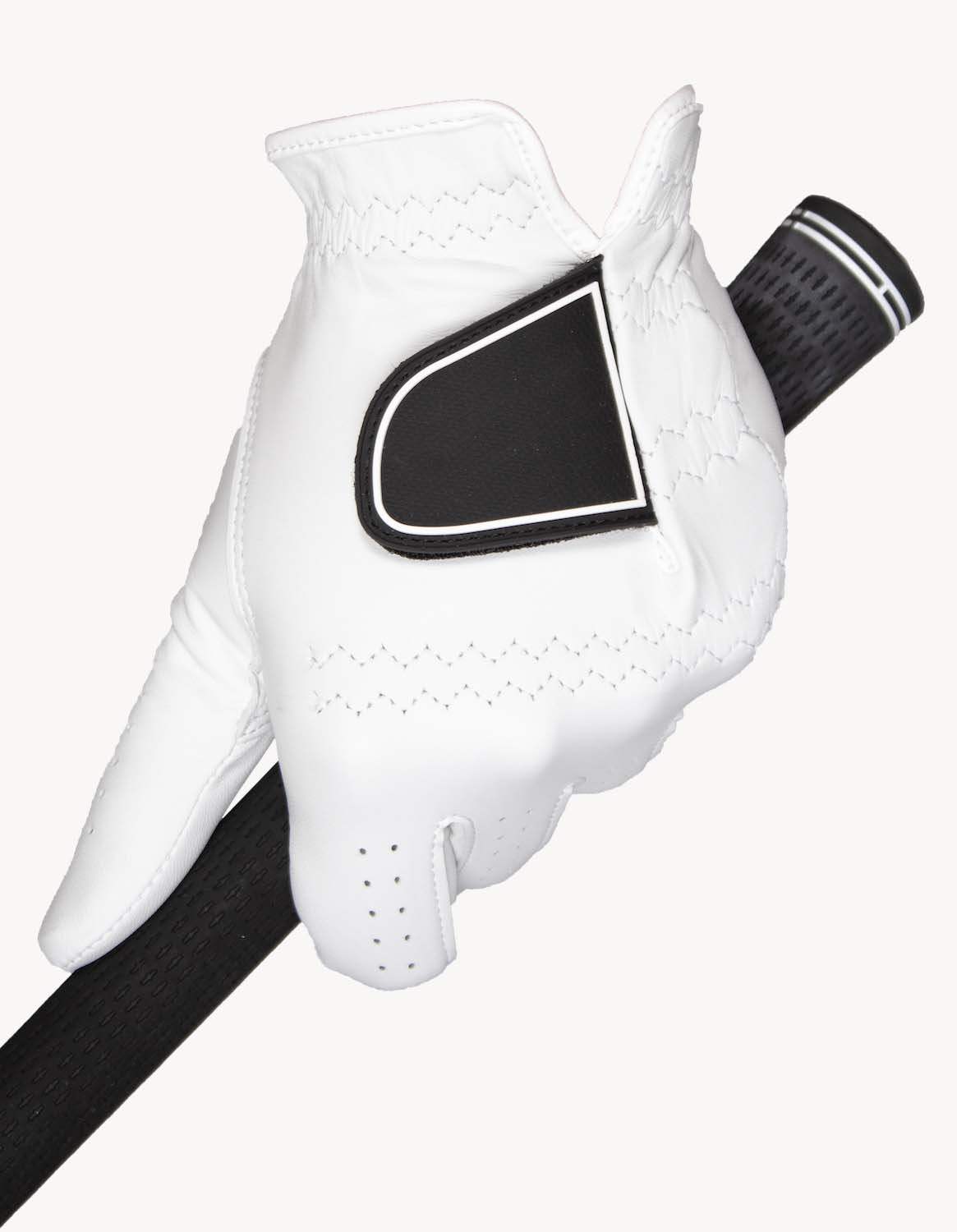
- Useful player gift: participants can wear the glove during practice or the event.
- Visible sponsor placement: a clear closure-tab logo can appear in photographs and on the course.
- Premium upgrade: a glove can raise the perceived quality of a player pack.
- Event memory: the item can remain useful after scorecards and paper materials are discarded.
- Tiered gifting: different materials or packaging can separate general players, VIPs and winners.
Benefits for Corporate Events
- Brand relevance: the gift matches the activity rather than feeling generic.
- Client hospitality: premium materials can support executive or VIP experiences.
- Employee engagement: gloves can be used in team events, incentives and recognition programs.
- Campaign consistency: glove colors, packaging and inserts can match a broader event identity.
- Agency-friendly production: artwork, packaging and delivery can be organized around a campaign brief.
Tournament vs. Corporate Event Comparison
| Planning area | Golf tournament | Corporate event |
|---|---|---|
| Primary goal | Participant experience, sponsor value and event identity | Client relationships, employee engagement and corporate branding |
| Typical recipient | Registered players, volunteers, winners or VIP guests | Clients, prospects, executives, staff or partners |
| Branding approach | Event logo plus presenting sponsor | Corporate logo, campaign identity or co-branding |
| Packaging | Player-pack insert, header card or tournament gift box | Premium box, message card, personalized sleeve or gift set |
| Assortment risk | Mixed golfer profile and late registration changes | Guest list changes, personalization and approval delays |
| Best ordering method | Participant forecast plus spare sizes | Guest segmentation plus approval calendar |
Branding Opportunities
Branding should make the glove recognizably yours without compromising comfort, flexibility or visual clarity. The closure tab is usually the most practical branding area because it is visible and separated from high-wear palm zones.
Branding opportunities
- Event logo on the closure tab
- Presenting sponsor logo on a patch or packaging panel
- Club crest or tournament monogram
- Corporate colors across the tab, trim or backhand
- Player initials or team identifiers where the process allows
- Commemorative date or edition number on the insert or box
- QR code on packaging for schedules, leaderboards or sponsor content
Single-sponsor and multi-sponsor layouts
A single-sponsor event can place the main logo directly on the glove. Multi-sponsor events should prioritize one primary mark on the glove and move secondary sponsors to the card or box. This prevents tiny artwork, overcrowding and approval conflicts.
Customization Options
Customization is more than logo placement. A complete event brief may include the glove construction, color, fit, closure, artwork, labels, packaging and distribution method.
Product customization
- Cabretta leather, microfiber or hybrid construction
- Standard, cadet, women’s or junior patterns where available
- Left-hand and right-hand glove production
- Closure-tab shape and color
- Backhand perforation, stretch panels and ventilation details
- Reinforcement in selected wear areas
Presentation customization
- Printed size and hand labels
- Individual polybags or recyclable paper sleeves
- Header cards, inserts and gift boxes
- Barcode or SKU labels
- Player-name labels or team allocation stickers
- Carton markings for event-day sorting
Material Choices
The material determines feel, durability, presentation and price. Select it according to the event level and recipient expectations—not only the lowest unit cost.
| Material | Feel and positioning | Strengths | Considerations | Best use |
|---|---|---|---|---|
| Cabretta leather | Soft, premium and close-fitting | High perceived value, natural feel, executive presentation | Usually higher cost; needs careful storage and quality control | VIP gifts, premium tournaments, executive events |
| Synthetic microfiber | Consistent, practical and value-focused | Durability, repeatability, easier color coordination | May feel less luxurious than premium leather | Large charity events, staff tournaments, broad giveaways |
| Hybrid construction | Leather feel in key zones with synthetic flexibility | Balances comfort, durability and budget | Construction details must be clearly approved | Corporate days, sponsor packs, mid-premium programs |
| Weather-oriented synthetic | Designed for humid or changing conditions | Practical grip consistency and easy care | Event conditions and claims should be tested, not assumed | Outdoor events with uncertain weather |
Golf Monthly’s glove guidance distinguishes premium leather for feel from synthetic options for durability and emphasizes fit, hand orientation and intended conditions. Review the specialist buying guidance.
Printing and Decoration Methods
Decoration method should match the surface, artwork detail, order volume and expected flexibility. Not every method is suitable for every glove panel.
| Method | Best placement | Appearance | Good for | Important limitation |
|---|---|---|---|---|
| Logo printing | Closure tab, patch or selected synthetic panel | Clean and versatile | Event logos, sponsor marks and solid-color graphics | Ink and adhesion must be tested on the chosen surface |
| UV printing | Suitable tab, rigid patch or packaging component | Detailed, multicolor output | Complex graphics and small color variations | May not suit highly flexible or heavily stretched areas |
| Screen printing | Synthetic or textile areas, sleeves and packaging | Strong solid colors | Simple logos and higher quantities | Fine gradients and tiny details may not reproduce well |
| Heat transfer | Compatible synthetic or textile panels | Sharp multicolor design | Campaign graphics and short text | Heat-sensitive materials and high-flex zones need testing |
| Embroidery | Textile patch or structured backhand panel | Premium texture | Club crests and executive programs | Dense stitching can add stiffness or weight |
| Embossing/debossing | Leather tab or leather patch | Subtle, premium and tonal | Luxury corporate gifts and understated branding | Requires tooling and works best with simpler artwork |
Sizing Guide for Event Orders
Golf glove sizing varies by pattern, material and manufacturer. Use the final approved measurement chart for the exact product. Do not copy a universal size chart from another brand.
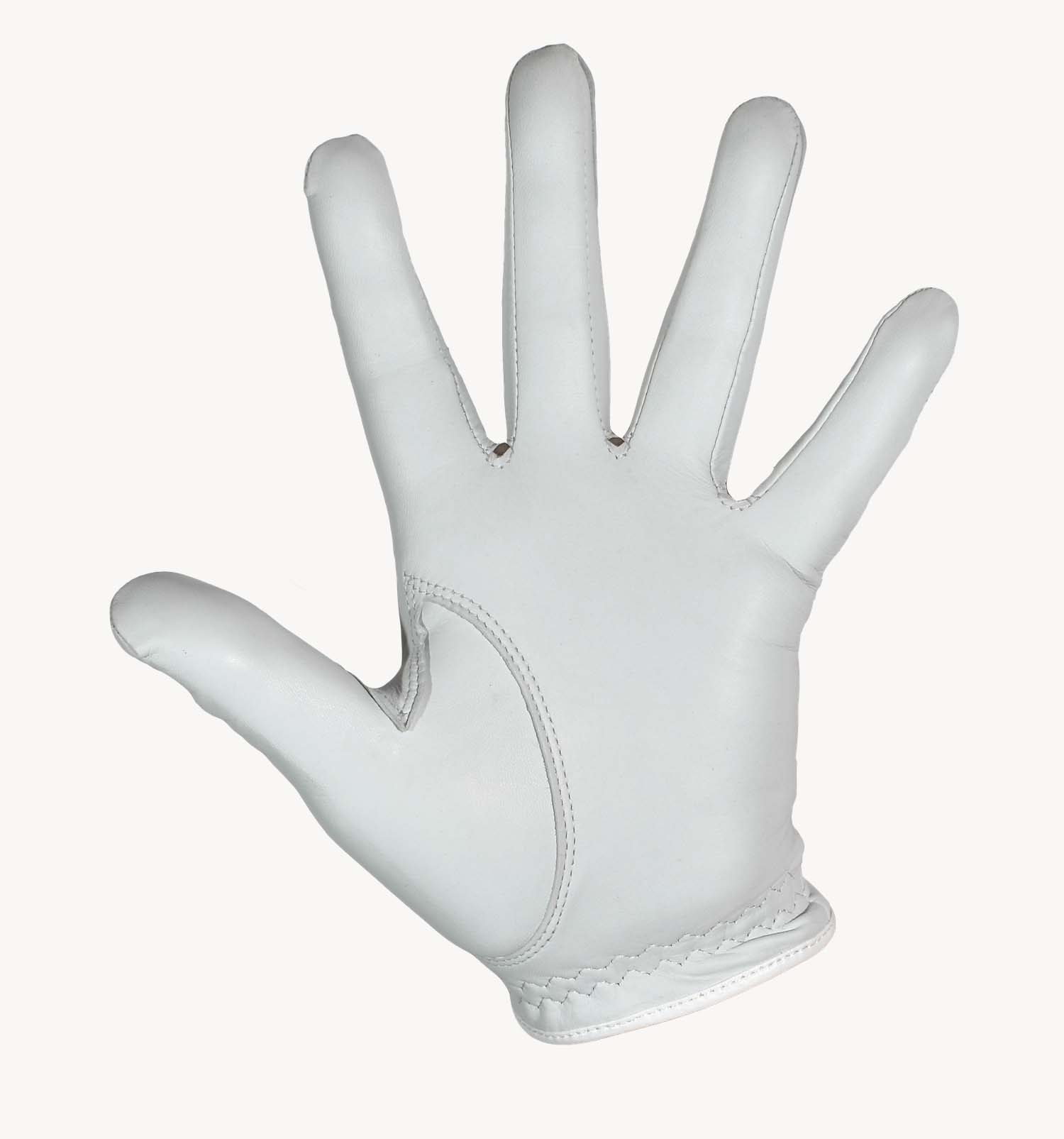
As a practical rule, a right-handed golfer normally wears a glove on the left hand, while a left-handed golfer normally wears a glove on the right hand. Fit should feel snug across the palm with minimal loose material at the fingertips. Golf Monthly’s fitting guidance supports these basic checks.
| Size group | Planning use | Event-order note |
|---|---|---|
| Standard adult S–XXL | General men’s or unisex adult programs | Confirm the supplier’s actual measurements and expected best-selling sizes |
| Cadet sizes | Broader palm with shorter finger proportions | Useful when the participant group includes golfers who struggle with standard finger length |
| Women’s pattern | Programs designed around a dedicated women’s fit | Do not assume a smaller men’s size provides the same proportions |
| Junior sizes | Youth clinics, family events and junior tournaments | Confirm age group and measurements before ordering |
| Left-hand glove | Usually worn by right-handed golfers | Often the larger share, but never guess without event data |
| Right-hand glove | Usually worn by left-handed golfers | Keep a planned allocation and spare units |
Information to collect from participants
- Playing hand: right-handed or left-handed golfer
- Current glove brand and size, if known
- Standard or cadet preference
- Women’s, men’s/unisex or junior pattern
- Any exchange requirement before the event
Design Best Practices
1. Keep the glove logo simple
Use one primary logo or short mark on the glove. Fine text, multiple sponsor logos and long event names are more readable on packaging.
2. Use vector artwork
Supply AI, EPS, SVG or print-ready PDF files. Include approved Pantone, CMYK or RGB references and do not rely on screenshots.
3. Design for the actual decoration area
A closure tab is small. Build the artwork at the real production size and check whether fine lines, gaps and registered symbols remain clear.
4. Separate permanent and event-specific information
Keep the corporate logo on the glove and put the year, venue, player name or campaign message on the insert. This can simplify reorders and reduce obsolete stock.
5. Plan both hands and all sizes in the artwork system
Confirm that labels, packaging and carton marks clearly identify the glove hand and size. Do not depend on visual inspection alone.
6. Approve a physical sample
Review fit, color, stitching, logo placement, packaging and overall presentation before authorizing bulk production.
Ordering Process
Define the event brief
Share the event date, recipient type, quantity, budget level, delivery location and intended presentation.
Select the glove program
Choose material, construction, size range, glove hand, colors and packaging level.
Submit artwork
Provide vector logos, brand colors, sponsor hierarchy, packaging copy and approval contacts.
Confirm quotation
Review MOQ, sample cost, unit pricing, packaging, shipping terms, payment terms and exclusions.
Approve the sample
Check fit, material, stitching, decoration, labels, packaging and overall presentation.
Authorize bulk production
Freeze the approved specification and issue the final size-and-hand matrix.
Inspect, pack and dispatch
Complete quality checks, organize cartons for event use and confirm tracking or freight details.
Lead Times and Minimum Order Quantities
The following ranges are planning estimates, not a guaranteed delivery promise. Material availability, artwork complexity, revision cycles, order volume, packaging and destination can change the schedule.
| Stage | Typical planning range | What can delay it |
|---|---|---|
| Specification and artwork review | 1–3 business days | Missing files, unclear size mix, unapproved sponsor logos |
| Sample development | 3–7 days | Special materials, new patterns, complex branding or packaging prototypes |
| Sample revision | 3–7 days per round | Multiple approvers, late feedback or major design changes |
| Bulk production | 15–25 days after approval | Volume, material sourcing, number of variants and factory capacity |
| Quality control and packing | 1–3 days | Complex sorting, personalized labels or multi-destination cartons |
| Shipping | Quoted by destination and service | Customs, carrier schedules, holidays, remote delivery and weather |
Minimum order quantity
A typical starting MOQ is 100 pairs. The final minimum may apply by design, color, material or packaging version rather than only to the total order.
Pricing Factors and Bulk Order Discounts
Pricing should be compared as a complete delivered program. A low glove price can become expensive after separate tooling, packaging, sorting and urgent shipping charges are added.
| Pricing factor | Why it matters | How to control cost |
|---|---|---|
| Material | Cabretta, microfiber and hybrid constructions have different input costs | Match the material tier to the recipient and event objective |
| Order quantity | Setup and production planning are spread across the order | Request tiered quotes at realistic quantities |
| Number of variants | Each color, logo, hand and packaging version adds handling | Limit unnecessary variations and consolidate sponsor versions |
| Decoration method | Printing, embroidery, embossing and patches have different setup requirements | Use the simplest method that meets the visual goal |
| Packaging | Boxes, inserts, labels and personalization can add material and labor | Use one core package with variable labels when possible |
| Sampling and revisions | New patterns and repeated changes require additional work | Submit a complete brief and consolidate feedback |
| Shipping and deadline | Urgent air delivery can outweigh unit-price savings | Approve early and compare freight options |
How bulk order discounts work
Larger quantities may reduce the average cost because setup, tooling and planning are spread across more units. Discounts are not automatic or identical for every design. Ask for transparent quantity tiers—such as 100, 250 and 500 pairs—using the same specification so the comparison is meaningful.
Questions to ask in the quotation
- Is sample development included?
- Are logo setup or tooling charges separate?
- Does the unit price include packaging and labels?
- Are mixed sizes and both glove hands included?
- Is shipping included, estimated or excluded?
- What happens if the event quantity changes after approval?
Quality Considerations
Event merchandise carries the reputation of the organizer and sponsor. Quality checks should cover function, appearance, assortment and presentation.
Product quality checklist
- Material matches the approved sample and specification
- Left-hand and right-hand orientation is correct
- Sizes are consistent with the approved measurement chart
- Finger length, thumb position and palm fit are checked
- Stitching is even, secure and free from loose threads
- Closure tabs align and fasten correctly
- Logos are positioned consistently and remain legible
- Colors are compared against the approved reference
- Gloves are clean, paired correctly and free from visible damage
Event-readiness checklist
- Size and hand labels are easy to identify
- Packaging copy and sponsor logos are correct
- Individual names or team labels match the list
- Carton quantities and outer markings are accurate
- Spare units are separated and labeled
- Delivery tracking and receiving contact are confirmed
Sustainability Options
Sustainability options should be specific, documented and relevant to the chosen material. Avoid broad claims such as “eco-friendly” unless the supplier can explain what the claim covers.
Options to discuss
- Leather sourced from manufacturers audited or certified to a recognized standard
- Traceability information for leather and major components
- Microfiber or synthetic options selected for durability and longer useful life
- Reduced-plastic packaging or recyclable paper components
- Right-sized cartons and consolidated shipments
- Reusable gift boxes only when they add genuine value
- Accurate quantity planning to reduce obsolete event stock
The Leather Working Group sets audit standards for leather manufacturers and supports improvement in areas including certification, traceability and supply-chain responsibility. Ask for documentation rather than assuming that all leather from a supplier carries the same status.
Case Examples
The following are illustrative planning examples, not claims about specific client results. They show how the same product can be configured for different event goals.
Example 1: Charity Scramble
Goal: Useful participant gift with one presenting sponsor.
- Microfiber or hybrid glove
- Event logo on closure tab
- Presenting sponsor on header card
- Mixed adult sizes and both hands
- Simple polybag for fast player-pack assembly
Example 2: Executive Client Day
Goal: Premium hospitality gift for invited clients.
- Cabretta leather construction
- Subtle embossed corporate mark
- Premium gift box with message card
- Pre-collected participant sizes
- Extra exchange stock at registration
Example 3: Multi-Sponsor Tournament
Goal: Recognize several sponsors without overcrowding the glove.
- Primary event logo on glove
- Full sponsor panel on insert
- QR code linking to sponsor page
- Cartons sorted by player group
- Approval schedule for every logo owner
Common Mistakes to Avoid
- Ordering by total quantity only. A shipment can have the right total and still fail if the size and hand mix is wrong.
- Starting after sponsor approval is already late. Artwork review, sampling and revision time should be included in the event calendar.
- Putting every sponsor on the glove. Small logos become unreadable and difficult to reproduce. Use packaging for secondary marks.
- Using a universal size chart. Fit varies by pattern and material. Approve the exact manufacturer chart and sample.
- Skipping the physical sample. Digital mockups cannot fully show fit, texture, stitching, color or decoration behavior.
- Ignoring right-hand gloves. Most standard orders may lean toward left-hand gloves, but left-handed golfers still need the correct product.
- Forgetting registration and sorting. Labels, carton marks and spare stock affect event-day distribution.
- Assuming all decoration methods work everywhere. Test the chosen method on the actual surface and flex zone.
- Comparing unit prices without scope. Check packaging, setup, samples, sorting and shipping.
- Making unsupported sustainability claims. Verify material scope and documentation before printing claims.
Standards and Credibility Sources
These references support practical decisions on conformity, fit, product identification and responsible sourcing.
- R&A Rule 4.3: A plain glove that meets the Equipment Rules is allowed; a nonconforming glove or equipment that gives an unfair advantage with hand position or grip pressure is not allowed. Read the official rule.
- Golf Monthly fitting guidance: The glove should fit snugly, with no excess material across the palm or at the finger ends, and golfers must select the correct glove hand. Review the glove buying guidance.
- Leather Working Group: LWG operates audit standards and certification programs for actors in the leather supply chain and provides resources on traceability and responsible production. Visit LWG.
- GS1 GTIN: Retail programs that require barcodes should confirm product-identification rules for separately traded variations. Review GS1 GTIN information.
- PPAI: Promotional Products Association International is an industry resource for promotional-product professionals and buyers. Visit PPAI.
Compliance note: Tournament committees and buyers remain responsible for confirming event rules, local requirements, brand permissions and any product claims before distribution.
Frequently Asked Questions
What are custom tournament golf gloves?
They are golf gloves produced with an event, sponsor, club or company identity for tournaments, corporate golf days, participant packs, VIP gifts or promotional campaigns.
What is the minimum order quantity?
A typical starting MOQ is 100 pairs. The final minimum can depend on material, logo versions, colors, size and hand combinations, and packaging.
How long do custom golf gloves take to produce?
Samples commonly take 3–7 days, and bulk production commonly takes 15–25 days after sample approval. Artwork review, revisions, packing and shipping add time.
Can a company or tournament logo be printed on the glove?
Yes. The logo can usually be placed on the closure tab, a suitable patch or another approved area using a method matched to the selected material.
Can multiple sponsor logos be included?
Yes, but the glove should stay visually simple. Use one primary logo on the glove and place secondary sponsor logos on an insert, header card or gift box.
Which material is best for a corporate golf event?
Cabretta suits premium executive gifting, microfiber suits durable value programs, and hybrid construction balances feel, consistency and cost.
How do I choose the correct sizes and glove hands?
Collect each golfer’s playing hand and current glove size where possible. Right-handed golfers usually wear a left-hand glove, and left-handed golfers usually wear a right-hand glove.
Can individual player names or initials be added?
Personalization may be possible through labels, packaging, selected printing or patches. It increases data handling, approval requirements, cost and lead time.
Can the packaging be customized?
Yes. Options can include size and hand labels, inserts, header cards, polybags, paper sleeves, gift boxes, barcodes and carton markings.
Are custom tournament golf gloves legal for competition?
A plain glove that meets the Equipment Rules is allowed under R&A Rule 4.3. Avoid nonconforming features or equipment that gives an unfair advantage with hand position or grip pressure.
Can rush orders be produced?
Rush production depends on material availability, artwork readiness, order complexity, factory capacity and shipping options. Confirm feasibility before promising a date.
What artwork files should I supply?
Provide vector AI, EPS or SVG files, or a print-ready PDF. Include brand-color references, logo hierarchy, dimensions and written approval rights.
Can gloves be bundled with other event merchandise?
Yes. They can be packed with balls, towels, tees, apparel or printed materials, provided the packaging, carton plan and delivery schedule are agreed.
What affects the price of custom tournament golf gloves?
Material, quantity, decoration method, number of variations, packaging, sample development, sorting, shipping destination and deadline affect pricing.
Are sustainable options available?
Options may include documented leather sourcing, reduced-plastic packaging, recyclable paper components, durable synthetic materials and consolidated shipping.
How do I request an accurate quotation?
Send the event date, quantity, material preference, size and hand mix, logo files, packaging needs, delivery destination and target arrival date.
Get a Quote for Custom Tournament Golf Gloves
Share the event date, expected quantity, participant profile, material preference, logo files, packaging plan, delivery destination and target arrival date.
Recommended inquiry form fields: name, company, email, phone/WhatsApp, event date, event type, quantity, preferred material, size/hand data, branding method, packaging, destination, artwork upload and message.