

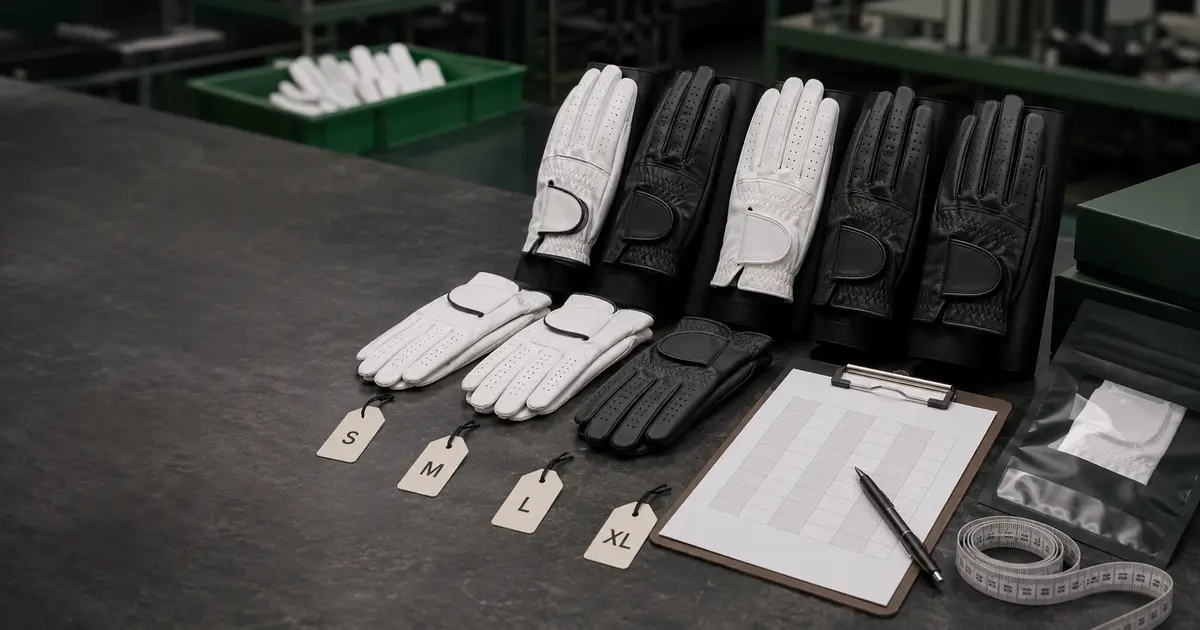
Direct answer: A reliable wholesale golf glove size chart is not a generic S–XL label list. It is an approved measurement specification covering hand length, palm width, finger proportions, tolerance, hand orientation and quantity by size. Before bulk production, approve physical samples in the core sizes and use them as the control reference for inspection.
For buyers, the goal is simple: order the sizes your customers actually need and make sure every production batch fits like the approved sample. This guide shows how to build that specification, plan a sensible size mix and reduce avoidable returns.
Why golf glove sizing matters in a wholesale order
A golf glove should feel close and secure without painful pressure, excess palm material or loose fingertips. In a retail program, inconsistent fit can create customer complaints even when the leather, stitching and branding look excellent.
Wholesale risk usually comes from one of four gaps:
- The buyer uses size names without defining measurements.
- The order total is confirmed without a size-and-hand matrix.
- Only one sample size is approved, then all sizes are graded without review.
- The finished batch is checked visually but not measured against the specification.
How to measure hand size for a golf glove
Ask your manufacturer to confirm the exact measurement method used for its pattern. Two common reference measurements are:
- Hand length: from the wrist crease to the tip of the middle finger.
- Palm width or circumference: measured around or across the widest part of the palm, excluding the thumb, as defined in the supplier’s method.
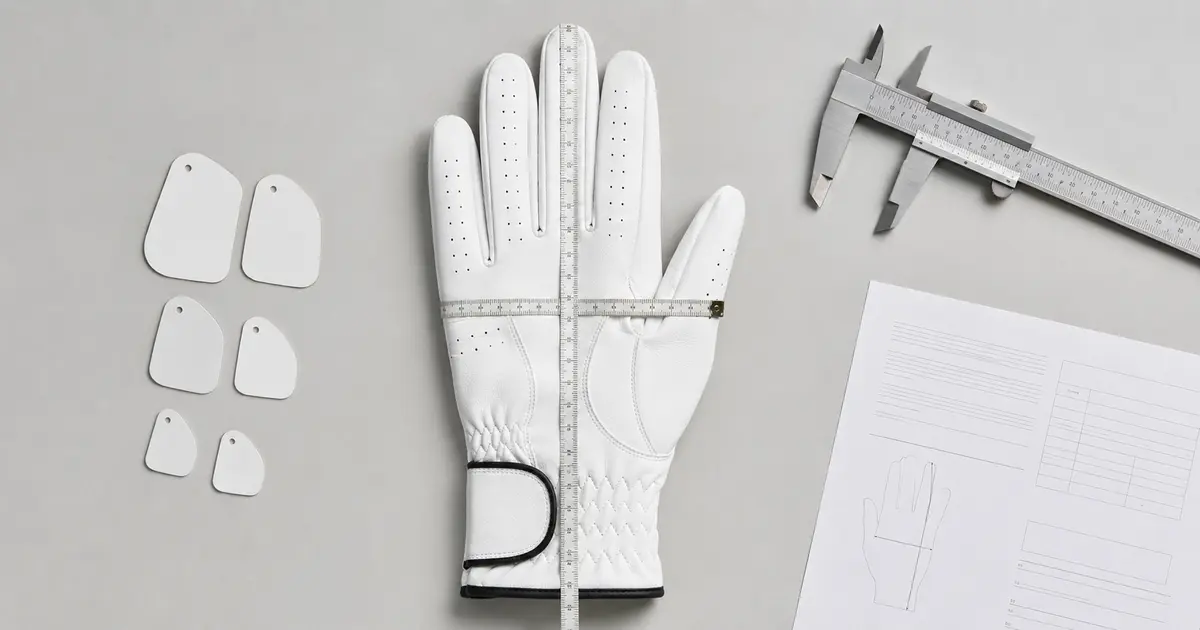
Use one method throughout the program
Do not mix a circumference-based consumer chart with a flat garment measurement table unless the relationship is documented. The body measurement helps select a size; the finished-glove measurement controls production. Both can be useful, but they are not interchangeable.
| Measurement | What it helps control | Buyer instruction |
|---|---|---|
| Hand length | Overall glove and finger length | State the exact start and end points |
| Palm width/circumference | Snugness through the palm | Specify flat width or circumference |
| Middle-finger length | Fingertip fit | Measure the same seam points each time |
| Wrist opening | Entry, closure and security | Confirm open/closed measuring condition |
| Closure position | Usable adjustment range | Approve placement on the physical sample |
How to build a buyer-approved golf glove size chart
Start with the manufacturer’s base pattern, then compare it with your target market, existing product or fit samples. The final chart should list finished measurements and agreed tolerances. Measurements below are not supplied as a universal chart; your approved specification must control the order.
Minimum fields to include
| Field | Example format | Why it matters |
|---|---|---|
| Size code | S, M, ML, L, XL | Connects product, label and carton data |
| Hand orientation | Left-hand glove / right-hand glove | Prevents reversed assortments |
| Finished measurements | Millimetres or inches | Creates an objective inspection reference |
| Tolerance | Agreed per measurement point | Defines acceptable variation |
| Material | Cabretta, microfiber or hybrid | Fit and recovery can differ by construction |
| Sample status | Approved version and date | Prevents production from using an old revision |
If your program includes women’s, junior or cadet proportions, create separate specification tables. A shorter-finger pattern should not be created merely by relabelling a standard glove.
How to plan a wholesale size and hand mix
Your best starting point is your own sales history, returns data, pre-orders or a controlled fit trial in the destination market. When that data is unavailable, run a smaller opening order or ask for a mixed-size sample set before committing to a large assortment.
An illustrative order matrix
The example below shows the format a buyer can send. The quantities are illustrative—not a universal demand forecast.
| SKU | Hand worn | Size | Illustrative quantity |
|---|---|---|---|
| GG-WH-LH-S | Left | Small | 60 |
| GG-WH-LH-M | Left | Medium | 160 |
| GG-WH-LH-ML | Left | Medium/Large | 130 |
| GG-WH-LH-L | Left | Large | 100 |
| GG-WH-LH-XL | Left | Extra Large | 50 |
Most right-handed golfers wear a glove on the left hand, while most left-handed golfers wear one on the right. However, the order split should follow your customer data and market, not a guess.
How material and construction affect fit
Material choice can influence stretch, recovery, softness and how the glove feels after use. Premium leather and synthetic constructions can both work well when the pattern and quality controls are matched to the material.
| Factor | Cabretta leather | Microfiber/synthetic |
|---|---|---|
| Initial feel | Soft, close and premium | Structured and consistent |
| Variation to manage | Natural hide thickness and stretch | Fabric lot and lamination consistency |
| Buyer focus | Leather grading, thickness and panel matching | Material weight, stretch and recovery |
| Best approval method | Wear test plus measured sample | Wear test plus measured sample |
For a deeper comparison, read Cabretta vs Microfiber Golf Gloves or review the Cabretta golf glove wholesale product.
How manufacturers keep sizes consistent across bulk production
A credible quality plan checks materials before cutting, controls pattern versions, measures samples during production and inspects finished goods against the approved specification.
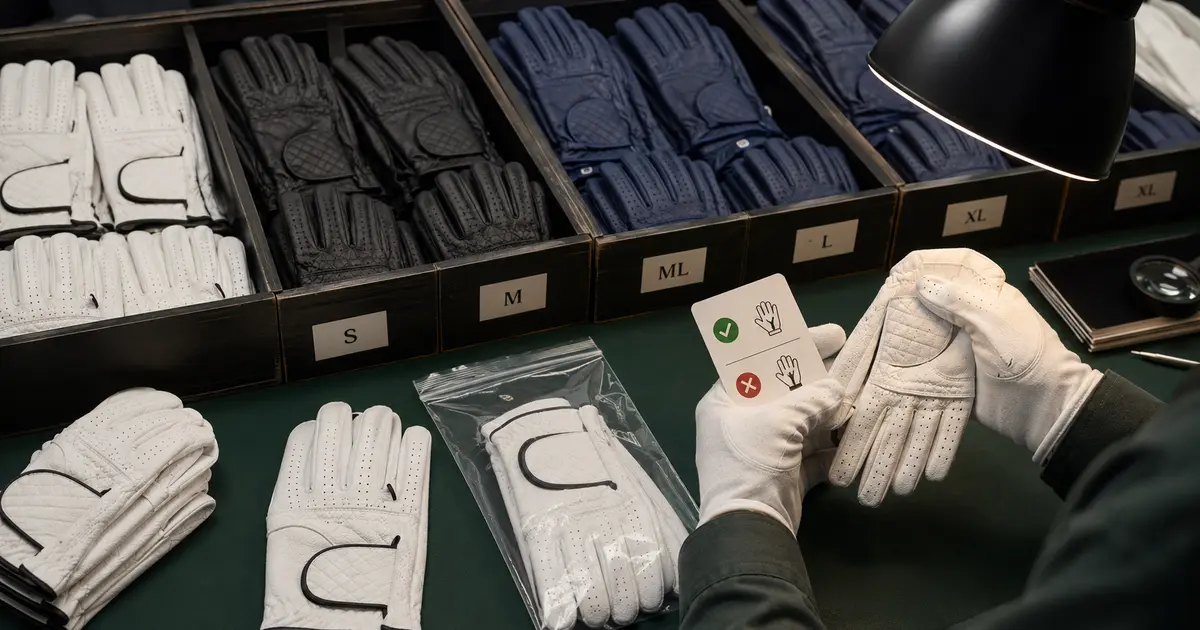
Recommended control points
- Material approval: confirm type, color, thickness and stretch characteristics.
- Pattern lock: identify the approved pattern revision for every size.
- Pre-production sample: approve fit, measurements, logo and closure position.
- In-line measurement: check pieces from multiple operators and production stages.
- Finished inspection: verify measurements, stitching, appearance, labeling and assortment.
- Packing audit: reconcile the size-and-hand matrix with polybags and cartons.
See Miraj Enterprises’ Production & Quality Process for the broader manufacturing workflow. Buyers should agree the inspection plan and acceptance criteria before production rather than after goods are packed.
Product designs should also respect the applicable golf equipment rules. The USGA Equipment Rules for gloves and The R&A Equipment Rules describe the requirements for a plain glove. Buyers sourcing leather may also consult the Leather Working Group Manufacturer Standard when evaluating leather supply-chain claims.
Wholesale golf glove RFQ and sample checklist
Send the following information to receive a more accurate quotation and sampling plan:
- ☐ Target user: men’s, women’s, junior or another defined fit
- ☐ Material and construction: leather, synthetic or hybrid
- ☐ Size chart with measurement points, units and tolerances
- ☐ Quantity by size, hand orientation, color and SKU
- ☐ Logo artwork, application method, dimensions and placement
- ☐ Closure, perforation, reinforcement and seam requirements
- ☐ Individual packaging, barcode, label and carton instructions
- ☐ Destination country and required delivery window
- ☐ Sample sizes required and approval procedure
- ☐ Inspection method and acceptance criteria
Review the available customization options, browse the wholesale golf glove category, and compare your timing with the guide to golf glove MOQ, sample cost and production lead time.
Send Miraj Enterprises your size chart, size-and-hand matrix, material, logo files, packaging needs, destination and target date. Request a wholesale golf glove quotation.
❓ Frequently Asked Questions
Is there one universal golf glove size chart?
No. Size names and pattern measurements can vary between manufacturers and brands. Approve a finished-measurement chart, tolerances and physical samples for your specific program.
Which hand should I order for right-handed golfers?
Most right-handed golfers wear the glove on the left hand, and most left-handed golfers wear it on the right. Confirm your actual customer mix before setting wholesale quantities.
How can buyers reduce golf glove sizing returns?
Use customer or fit-trial data, define every measurement point, approve samples in core sizes, separate each size and hand as a SKU, and inspect production against the approved specification.
Should I approve only one sample size?
One sample can confirm the design direction, but buyers should review core sizes or a graded size set before large-scale production, especially for a new pattern or target market.
Final takeaway
A strong wholesale size plan connects customer measurements, finished-glove specifications, physical sample approval and batch inspection. Lock those details before cutting begins, and your order is far more likely to deliver consistent fit, accurate packing and smoother repeat production.